

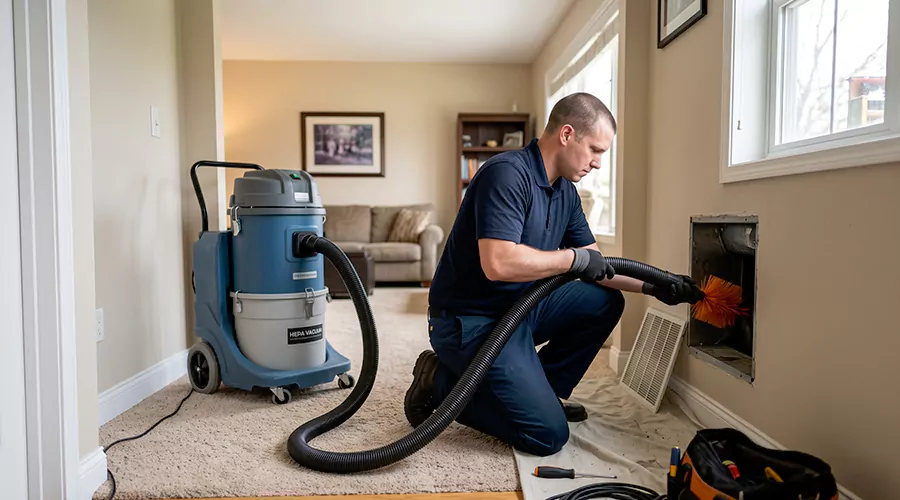
You can clean floor vents by lifting the register cover, vacuuming loose debris from the opening and wiping the cover with a material-safe cleaner. Most standard floor registers can be cleaned in approximately 10 to 20 minutes. Removing trapped hair and other debris helps keep the openings clear without requiring access to the entire duct system.
Floor vents often collect more visible debris than wall or ceiling openings because they sit directly in the path of household activity. Hair and carpet fibers can fall between the grille openings, while food crumbs or small objects sometimes enter the duct entrance. Dust can also gather around the outer frame where the register meets the flooring.
Regular cleaning prevents these materials from building up around the opening. However, the method must suit both the register cover and the surrounding floor. Wooden registers require different care from washable metal covers, and aggressive cleaning can damage the floor finish.
Why Do Floor Vents Get So Dirty?
Floor vents collect dust because they are exposed to particles settling from the surrounding room. Unlike ceiling openings, floor registers can also catch material that falls directly through their grilles. The amount of buildup depends on floor type and how frequently people use the room.
Dust and Debris Falling Through the Grille
Normal household activity causes loose material to collect around floor openings. Hair and fabric fibers can pass between the grille slats, especially when the register is located near furniture or a frequently used walkway. Small particles may settle just beneath the cover and remain there until the opening is cleaned.
This buildup is often concentrated in the first few inches of the duct boot rather than spread throughout the duct system. Removing the cover usually makes it easier to see where the debris has collected. A flashlight can help distinguish accessible surface deposits from material located farther down the duct.
Carpets and Rugs Near the Vent
Carpet fibers are a common source of material collecting near floor registers. Walking across carpets can disturb settled particles, while vacuuming may move loose fibers toward the vent opening. Registers installed at carpet edges can also collect material where the flooring meets the metal frame.
A thick rug placed partly over a floor vent creates an additional concern because it can restrict airflow. The rug may also collect dust around its edges as conditioned air moves through the covered opening. Keeping the register uncovered helps maintain the intended airflow path.
Pet Hair and Everyday Household Activity
Homes with pets may have more visible hair collecting between floor register openings. Loose hair often gathers along baseboards or beneath furniture before moving toward nearby vents during normal household activity. Over time, it can form clumps that are difficult to remove without lifting the cover.
Busy living areas can collect more material than rarely used rooms. A floor register near a dining table may contain crumbs, while one near a bedroom doorway may collect lint from clothing. These differences generally reflect how the surrounding space is used.
What Tools Do You Need to Clean Floor Vents?
Floor vent cleaning requires a small set of household tools when the dirt is limited to the register and nearby duct opening. A vacuum is useful for removing loose particles, while a soft brush helps clean narrow slats. The correct cloth and cleaning solution depend on the cover material.
Gather these supplies before beginning:
- Vacuum cleaner with a crevice attachment
- Soft brush attachment for loose dust
- Microfiber cloths
- Mild dish soap and warm water
- Small soft-bristled brush
- Flashlight
- Screwdriver if the register is fastened to the floor
- Small container for screws or removable parts
A towel or protective cloth can also be helpful when cleaning a register near hardwood flooring. It provides a place to set down the removed cover without scratching the floor. Avoid sharp metal tools for prying a register loose because they can damage the trim or surrounding flooring.
Some decorative floor registers include removable dampers or adjustable louvers. Check how these parts fit together before cleaning so they can be reinstalled correctly. If a cover contains electronic components, follow its specific cleaning instructions instead of using water.
How to Clean Floor Vents Step by Step?
The best way to clean a floor vent is to remove the register cover and work from the top of the opening downward. Cleaning the cover separately provides access to both sides and allows loose material to be removed from the duct entrance. Take care not to damage the surrounding floor or push debris farther into the duct.
Step 1. Turn Off the Heating or Cooling System
Use the thermostat to switch off the HVAC system and wait until the blower stops. This prevents air from moving through the opening while the register is removed. It also reduces the chance of loose dust being scattered during cleaning.
Move nearby rugs or lightweight furniture away from the opening to create a clear working area. If the register sits in hardwood flooring, protect the surrounding finish before placing tools nearby. Avoid leaving an uncovered floor opening unattended because someone could step into it.
Step 2. Remove the Floor Register Cover
Many residential floor registers are held in place by gravity and can be lifted straight out. Others use screws or clips that must be released before the cover can be removed. Examine the frame before pulling upward so you do not damage the floor.
If the register feels stuck, look for paint or flooring material holding the edges in place. Avoid forcing a screwdriver against the flooring because it can leave permanent marks. Once the cover is removed, place it on a protected surface and check whether any adjustable damper parts are loose.
Step 3. Vacuum the Register and Nearby Floor
Start by vacuuming loose dust from both sides of the cover. Use the soft brush attachment to collect material around narrow slats and movable louvers. Work carefully near painted surfaces to avoid removing the finish.
Next, vacuum the surrounding floor and the edges of the opening. Dust often collects along the gap between the register frame and the flooring, particularly where carpet fibers meet the metal cover. Removing this material first prevents it from falling into the duct during the next step.
Step 4. Clean the Accessible Duct Boot
Shine a flashlight into the uncovered opening to check for visible debris. The duct boot is the section that connects the floor register to the duct system below. Loose material may collect near its bottom or around the corners where airflow changes direction.
Use the vacuum's crevice attachment to remove debris you can reach without forcing the hose into the duct. Avoid scraping internal surfaces or pulling at insulation. If the opening contains wiring or unfamiliar equipment, stop rather than attempting to clean around those components.
Step 5. Wash the Floor Register
For washable metal or plastic covers, use warm water with a small amount of mild dish soap. Clean the grille openings with a soft brush and wipe the surrounding frame with a cloth. Pay attention to the underside because debris often settles around the damper mechanism.
Wooden registers should not be submerged. Excess moisture can cause wood to swell or damage its protective finish. Use a lightly damp cloth instead and remove remaining moisture immediately.
Step 6. Dry and Reinstall the Register
After cleaning, dry the cover thoroughly and check for remaining moisture between the slats. Metal registers can develop corrosion when water remains trapped near damaged coatings. Plastic covers should also be dry before they are placed back over the duct opening.
Position the register in its original location and check that it sits flat against the surrounding floor. Reinstall any screws or clips without overtightening them. Make sure the adjustable damper moves normally before restoring HVAC operation.
Step 7. Check the Airflow
Restart the heating or cooling system and observe the airflow from the cleaned opening. A properly seated register should remain stable without rattling or shifting. If the cover has an adjustable damper, return it to its previous setting.
Compare the airflow with nearby vents that serve similar rooms. Cleaning visible debris may improve airflow if the opening was substantially blocked, but it will not correct hidden duct restrictions. If airflow remains noticeably weak, the cause may be elsewhere in the HVAC system.
How Do You Clean Different Floor Vent Materials?
Floor register materials respond differently to water and cleaning products. Painted metal can be durable but may rust if its protective coating is damaged. Wooden registers are more sensitive to moisture, while plastic covers can be affected by strong solvents or excessive heat.
Using the correct method helps maintain the register's appearance and prevents avoidable replacement. Check the cover material before soaking it or applying a cleaning product. Decorative registers may also have finishes that require extra care.
| Register Material | Recommended Cleaning Method | What to Avoid |
|---|---|---|
| Painted steel | Mild soapy water and soft brush | Abrasive pads that remove the finish |
| Aluminum | Gentle washing and thorough drying | Strong alkaline cleaners |
| Plastic | Mild soap and microfiber cloth | Strong solvents or excessive heat |
| Finished wood | Lightly damp cloth followed by drying | Soaking or prolonged water exposure |
| Decorative metal | Soft brush and finish-safe cleaner | Harsh scrubbing of coated details |
If the register shows extensive rust or severe deformation, cleaning may not restore its original condition. Bent louvers can also interfere with the way air leaves the opening. Minor surface dirt is a cleaning issue, while damage affecting the structure of the cover may make replacement more practical.
How Do You Remove Objects That Fall Into Floor Vents?
Small objects occasionally fall through floor registers because the openings sit close to normal household activity. Coins and small toys may become trapped inside the duct boot directly beneath the cover. In many cases, the object remains visible and can be retrieved without dismantling the duct system.
Turn off the HVAC system before removing the register cover and inspect the opening with a flashlight. If the object is visible near the top, a suitable grabber tool may help retrieve it without forcing it farther into the duct. Avoid reaching blindly into metal openings because unfinished edges can be sharp.
For small non-fragile objects, a vacuum attachment may help when the material can be safely collected. However, do not vacuum liquids or potentially hazardous substances with an ordinary household vacuum. If an item has moved beyond the visible section, repeated probing can push it farther away.
The safest approach is to retrieve only objects that are clearly visible and accessible. Never leave a floor register removed while children or pets can reach the opening.
Can You Clean Floor Vents Without Removing Them?
Floor vents can be cleaned without removing the cover when dust is limited to the visible grille. A vacuum with a soft brush attachment can collect loose particles from the top surface and between accessible slats. A slightly damp microfiber cloth can then remove deposits that remain attached to the finish.
This method works well for routine housekeeping and is useful when a register is fastened securely into the flooring. Use small movements around the edges rather than pushing debris through the openings. A soft brush can help lift trapped lint where a vacuum attachment cannot reach comfortably.
However, cleaning only the top surface leaves any debris beneath the cover untouched. If you can see crumbs or hair inside the opening, removing the register may provide better access. The decision should depend on the amount of visible material rather than assuming that every cleaning requires removal.
What Problems Can Develop if Floor Vents Stay Dirty?
Light dust on a floor register usually has little effect on HVAC performance. Problems become more likely when hair or other debris covers a substantial part of the opening. The degree of restriction depends on the amount of material and whether the register's adjustable damper is also affected.
| Condition | What Happens | Appropriate Action |
|---|---|---|
| Light surface dust | The register looks dirty but remains open | Routine vacuuming |
| Debris between slats | Hair and lint partially cover openings | Remove the cover and clean it |
| Objects beneath the register | Items collect in the accessible boot | Retrieve safely if visible |
| Damaged grille or damper | Cover no longer fits or operates correctly | Evaluate repair or replacement |
| Heavy internal debris | Material extends into the duct system | Investigate the source and extent |
Most floor register problems can be identified visually. A loose screw or damaged damper may create noise without significant dust buildup, while a large pile of debris can restrict airflow even when the cover looks relatively clean. Inspecting beneath the register is therefore useful when the visible surface does not explain the problem.
How Much Does Floor Vent Cleaning Cost?
Routine floor register cleaning generally requires supplies already available in many homes. In 2026, basic replacement floor registers commonly sell for approximately $12 to $20 in some standard sizes, while decorative models may cost substantially more. Replacing an intact register is not necessary simply because it has collected dust.
Whole-system duct cleaning is a different expense. Reported 2026 U.S. project estimates commonly range from $271 to $509, with some larger projects costing more. Those figures should not be used as the expected price for cleaning a single removable floor cover.
How Often Should You Clean Floor Vents?
Floor vents should be inspected whenever visible debris starts collecting across their openings. For many homes, a monthly visual check is a practical starting point, with more detailed cleaning every few months as needed. The correct frequency depends on room activity and how quickly particles accumulate.
Registers near carpets or pet resting areas may require attention more often than vents in low-traffic rooms. A floor opening near a dining area may also collect crumbs that should be removed promptly. Regular observation is more useful than waiting for the vent to become heavily blocked.
During household cleaning, vacuum the surrounding flooring before inspecting the register. This reduces the chance of loose particles being pushed toward the opening. If you notice recurring debris immediately after renovation work, inspect the exposed boot once the surrounding dust has been removed.
When Should You Call a Professional?
Professional inspection is appropriate when heavy debris extends beyond the accessible floor opening or when airflow problems continue after cleaning the register. Signs of pest activity and suspected mold growth also require investigation. These conditions involve possible contamination or duct damage that cannot be resolved by washing a removable cover.
A qualified HVAC technician can inspect the duct connection beneath the floor and check for restrictions farther along the airflow path. The assessment may also identify disconnected duct sections or damaged insulation. When significant internal contamination is present, specialized equipment can remove debris while limiting the spread of particles into occupied rooms.
The entire duct system does not need to be cleaned solely because a floor register contains household dust. The decision should depend on visible conditions and the underlying cause. Cleaning the duct without addressing an active source may allow the same problem to return.
How Can You Keep Floor Vents Cleaner for Longer?
Preventing floor vent buildup starts with controlling the debris that reaches the opening. Regular floor cleaning removes particles before they settle into the register. Keeping the cover securely installed also helps reduce the chance of objects entering the duct boot during normal household activity.
Clean the Surrounding Flooring Regularly
Vacuum carpets and floor edges near the register during routine housekeeping. Use an attachment that collects loose particles without pushing them toward the openings. For hard flooring, remove dust with a suitable floor-cleaning method before wiping the register. This approach helps control particles at their source rather than waiting until they collect inside the cover.
Keep Registers Uncovered
Avoid placing rugs or large furniture directly over floor vents. A covered supply opening can restrict airflow and interfere with the room's heating or cooling performance. Make sure the register sits flat and that adjustable louvers remain in their intended position. Damaged covers should be addressed because loose or broken sections may allow additional debris to enter.
Inspect After Messy Household Activities
Check nearby floor registers after renovations or other activities that produce substantial dust. Remove loose material from surrounding surfaces before it settles into the duct opening. If children regularly play near a floor vent, inspect the cover for small objects that may have entered. These checks take only a few minutes and can prevent debris from collecting in areas that are harder to reach.
Conclusion
Cleaning floor vents involves removing loose debris from the register and the accessible duct opening. The method is simple when the cover can be lifted safely and its material is suitable for gentle cleaning. Regular attention helps prevent blocked openings and trapped objects. If substantial debris extends deeper into the duct, professional assessment may be appropriate. This week, inspect the floor registers in your busiest rooms.